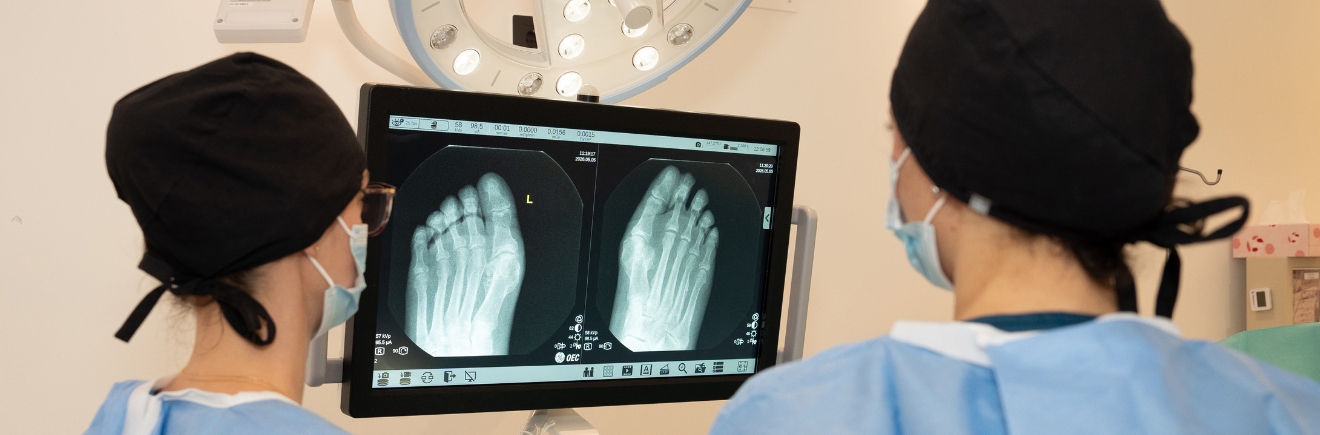
Ultrasound-guided surgery for safer and more precise treatments
Ultrasound-guided surgery allows surgical procedures to be performed with real-time ultrasound support, making it easier to visualize anatomical structures such as tendons, nerves, or soft tissues during the intervention. This approach improves precision, reduces tissue trauma, and allows for more controlled action in various foot pathologies.
At Pie Vital, we use ultrasound as a support tool to plan and execute procedures with greater accuracy, especially in nail treatments, guided injections, or soft tissue interventions, favoring a more predictable recovery and a more conservative approach.
Real-time visualization
Ultrasound allows for precise localization of structures during the procedure, helping to intervene in the exact area and reduce unnecessary intervention on healthy tissues.
Greater therapeutic precision
The use of ultrasound imaging facilitates targeted and personalized treatments, especially in soft tissue pathologies, injections, and specific foot procedures.
Less invasive procedures
Ultrasound guidance allows for more conservative techniques, improving procedure control and optimizing patient recovery.
Ultrasound technology applied to foot treatment
Our team integrates ultrasound into diagnosis and specific procedures to increase safety, improve therapeutic planning, and act with greater precision on the affected area. This approach allows for more informed clinical decisions and adapts the treatment to each case.
- Ultrasound-guided procedures
- Dynamic soft tissue diagnosis
- Greater control during treatment
- Conservative and personalized approach
Frequently asked questions
We answer your questions about ultrasound-guided surgery
What is ultrasound-guided surgery?
It is a procedure that uses real-time ultrasound to visualize internal foot structures and guide treatment with greater precision.
What is ultrasound used for in podiatry?
It is used to diagnose pathologies, assess soft tissues, and guide procedures such as injections or specific treatments.
Is ultrasound-guided surgery safer?
Real-time visualization allows for greater control over the affected area, which improves the precision of the procedure.
What problems can be treated with ultrasound-guided surgery?
It can be applied to pathologies of tendons, fascia, neuromas, inflammatory processes, and soft tissue procedures.
Is an ultrasound-guided procedure painful?
It is performed using appropriate techniques and, when necessary, local anesthesia. Discomfort is usually mild and manageable.
When is this type of treatment recommended?
It is recommended when it is important to precisely locate the affected structure or perform a targeted treatment.
Does ultrasound replace other tests?
Not always, but it complements clinical assessment and provides dynamic information that other tests do not show.
Does it allow for a faster recovery?
By facilitating more precise and conservative procedures, it can favor a more controlled recovery depending on the case.