Nail Correction Without Surgery
Orthonyxia is a podiatric treatment designed to correct nail curvature when it tends to dig into the skin. It is a conservative technique that allows for progressive reeducation of nail growth, reducing pain and avoiding ingrown toenail surgery in many cases.
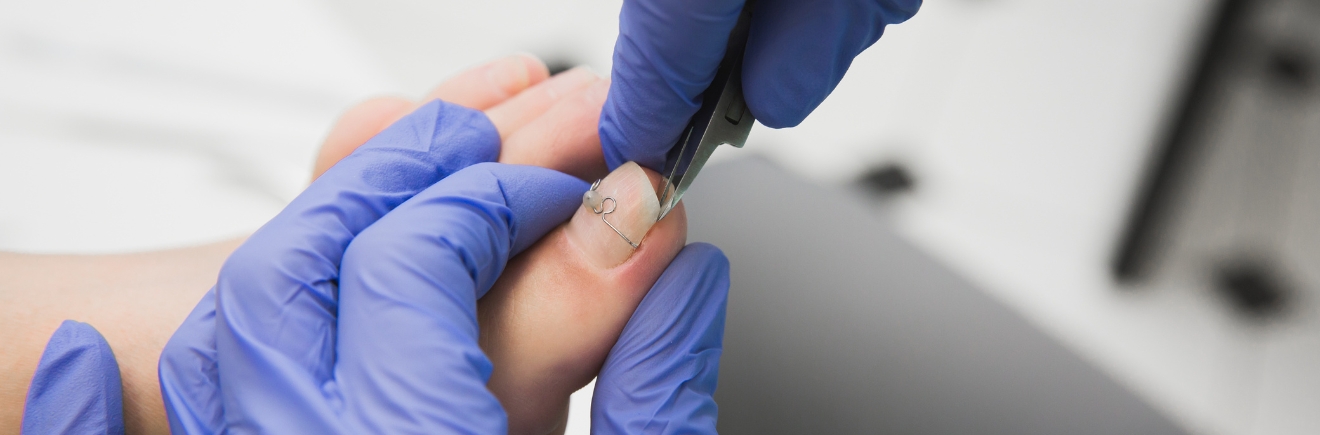
It involves placing corrective devices similar to small braces that modify the shape of the nail plate as it grows. This treatment is painless, compatible with daily life, and allows you to maintain your usual activities while the nail is being corrected.
Conservative Treatment
It corrects nail curvature without surgery using devices that guide its growth progressively and in a controlled manner.
Painless Technique
Placement is quick, requires no anesthesia, and allows you to continue wearing regular footwear and carrying out daily activities from the very first moment.
Progressive Monitoring
The treatment requires periodic reviews to adjust the device and ensure the nail grows correctly over time.
Effective Treatment for Ingrown Toenails
Orthonyxia is a particularly useful therapeutic alternative when ingrown toenails are recurrent or when surgery is to be avoided. By applying different types of correctors, adapted to the thickness and morphology of the nail, lateral pressure is reduced and nail shape is improved.
- Conservative Treatment Without Surgery
- Compatible with Daily Activities
- Indicated for Recurrent Ingrown Toenails
- Periodic Reviews Included in the Process
Frequently asked questions
We answer your questions about orthonyxia
What is orthonyxia?
Orthonyxia is a podiatric treatment that corrects nail curvature using corrective devices that act as a small traction system. Its goal is to reeducate nail growth so that the nail stops digging into the skin and the pain disappears.
What cases is it indicated for?
It is mainly used for recurrent ingrown toenails, highly curved nails, or patients who cannot or do not wish to undergo surgery. It is also useful when there is chronic nail pain or risk of the nail becoming ingrown again after other treatments.
Does orthonyxia hurt?
No. It is a painless treatment that does not require anesthesia. The device is placed on the nail and begins to work progressively, reducing the lateral pressure that causes the ingrown toenail.
How long does the treatment last?
It depends on nail growth and the degree of curvature, but it usually lasts several months. The device is typically changed periodically and reviews are conducted to adjust the correction as the nail grows.
Does it always avoid surgery?
In many cases yes, especially when the deformity is not very advanced. However, if the nail presents severe alterations or repeated infections, surgical treatment may need to be considered.
Can it be done on children or diabetics?
Yes. It is a safe treatment widely used in children, elderly people, and at-risk patients, as it avoids invasive procedures and allows for progressive monitoring of nail evolution.
Can you lead a normal life?
Yes. It allows you to walk, play sports, and wear regular footwear. One of its main advantages is that it does not require rest or sick leave.
Is the correction permanent?
It can be long-lasting, but it depends on the cause of the ingrown toenail. Factors such as foot shape, footwear, or biomechanics can influence recurrence, so in some cases the treatment may need to be repeated.