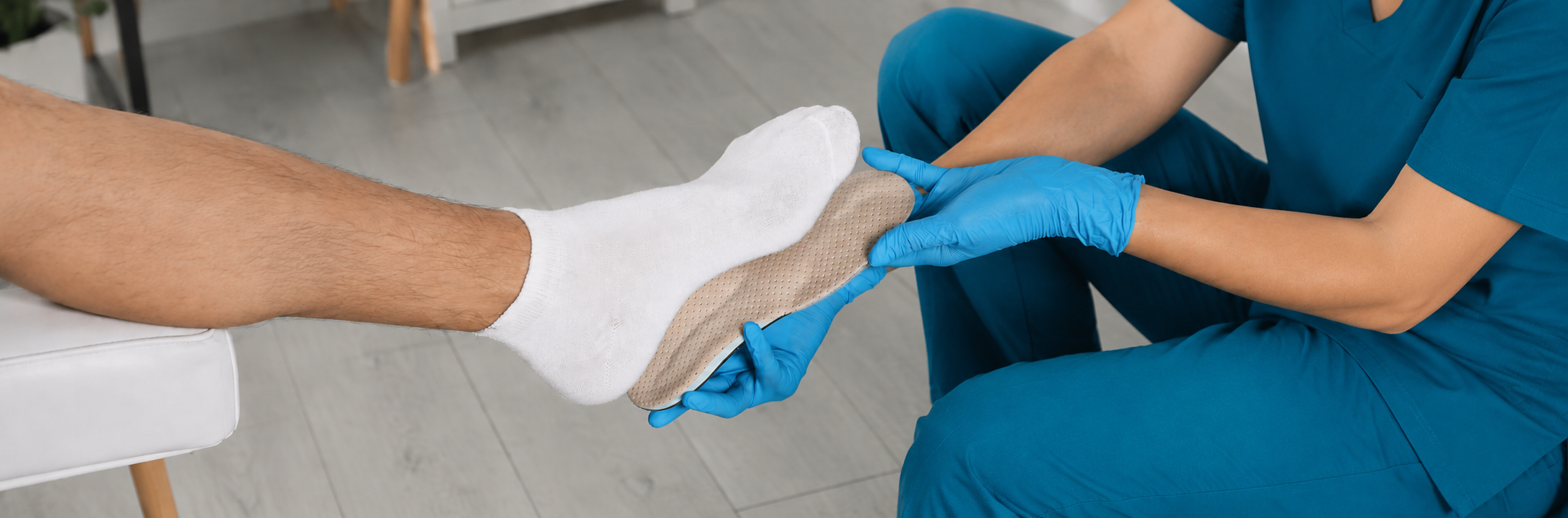
Custom Insoles to Improve Foot Function
Custom insoles, also called plantar orthotics, are custom-designed devices that help improve load distribution, correct biomechanical alterations, and stabilize the foot during gait. Their design is based on a prior biomechanical study that allows the insole to be adapted to each person’s characteristics.
At Pie Vital, we create individualized insoles, taking into account gait, daily activity, footwear type, and pathology. The choice of materials and design is adjusted to each case with the aim of improving function, reducing pain, and preventing the onset of injuries.
Custom Design
Each insole is manufactured according to the results of the biomechanical study, adapting to the foot's morphology and the patient's functional needs.
Material Selection
We select materials and structures based on activity, age, weight, and type of pathology to ensure comfort and effectiveness.
Follow-up and Adaptation
We conduct follow-up appointments after delivery to check adaptation, make adjustments, and ensure the treatment's proper functioning.
Biomechanical Treatment to Prevent and Relieve Injuries
Insoles help compensate for support alterations, improve musculoskeletal alignment, and reduce overload on bone, joint, and muscle structures. This treatment is used both to relieve symptoms and to prevent injuries resulting from poor foot mechanics.
- Based on prior biomechanical study
- Individualized laboratory manufacturing
- Adapted to activity and footwear type
- Follow-up appointments to optimize results
Frequently asked questions
We answer your questions about custom insoles
What are custom insoles?
They are plantar orthotics specifically designed for each patient based on a biomechanical study. They allow for adapting foot support, improving function during gait, and compensating for alterations that can cause pain or overload.
What are insoles used for?
They are used to improve load distribution, stabilize the foot, and correct biomechanical alterations that can affect the foot, knee, hip, or spine. They also help prevent injuries and improve performance in daily or sports activities.
Is a biomechanical study necessary before making insoles?
Yes, a biomechanical study allows us to analyze gait, detect alterations, and obtain the necessary measurements to design insoles truly adapted to each patient and their functional needs.
How long does it take to adapt to insoles?
The adaptation period is usually progressive and can last several weeks. During this time, the body gets used to the new foot mechanics, so it is important to follow the specialist’s instructions.
When do results start to be noticed?
In many cases, improvement can be perceived within the first few weeks, although the most stable results are usually observed after the full adaptation and follow-up period.
Who should use custom insoles?
People with foot pain, support alterations, leg length discrepancies, athletes, or patients with lower limb discomfort. They are also recommended for children when there are gait or foot development alterations.
Can the same insoles be used in all types of footwear?
It depends on the design and type of footwear. In some cases, it is recommended to adapt the format or have different insoles depending on daily or sports use.
Is it necessary to review insoles over time?
Yes, reviews allow us to check the condition of the insole, assess the patient’s progress, and make adjustments to maintain the effectiveness of the treatment.