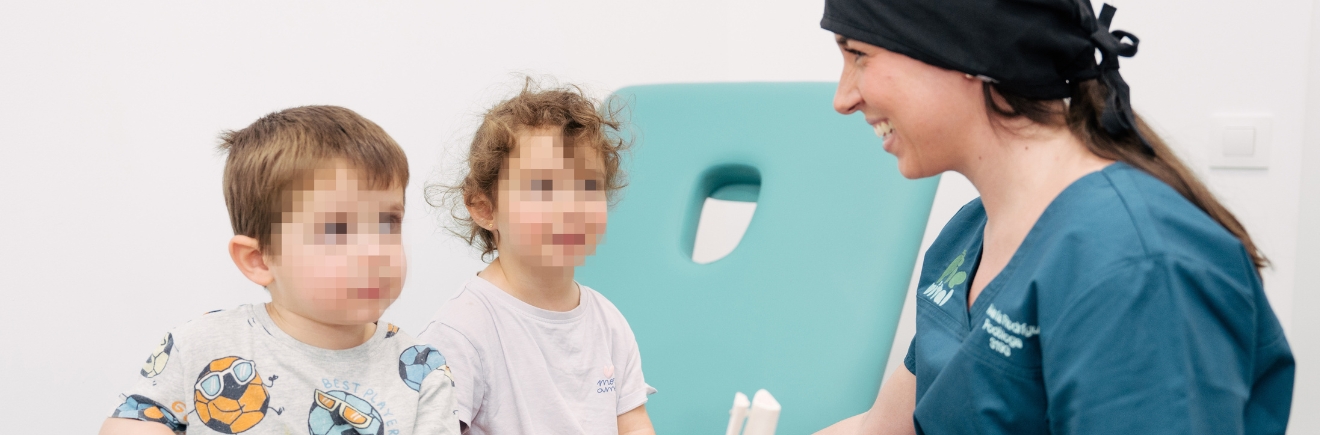
Children's podiatry for proper foot development
Children’s podiatry focuses on the diagnosis, prevention, and treatment of structural or functional foot alterations during growth. A child’s feet are in constant development, so early detection of possible alterations allows for simple corrections and the prevention of future problems.
At Pie Vital, we perform specific assessments to analyze the gait, posture, and evolution of the pediatric foot. The goal is to ensure proper development, detect deviations, and apply treatments adapted to each stage of growth.
Developmental assessment
We assess the evolution of the foot, gait, and posture to detect functional or structural alterations from an early age.
Prevention and correction
Early detection allows for simple treatments such as exercises, recommendations, or custom insoles when indicated.
Evolutionary Follow-up
We perform periodic check-ups to observe the evolution of the gait and adapt the treatment to the child's growth.
Specialized care for the growing foot
The pediatric foot requires a specific approach that takes into account the growth and progressive adaptation of the musculoskeletal system. Through clinical examination and functional analysis, it is possible to identify alterations that can influence gait, posture, or daily activity.
- Clinical assessment of the child's foot
- Biomechanical study adapted to age
- Early detection of alterations
- Personalized treatments based on growth
Frequently asked questions
We answer your questions about children's podiatry
When should a child see a podiatrist for the first time?
A first assessment is recommended when the child starts walking or when there are doubts about their gait. It is also advisable to visit if there are frequent trips, foot deviations, or discomfort during daily activities.
Is flat foot normal in children?
In many cases, flat foot is part of a child’s normal development, especially at early ages. However, it is important to assess its evolution to determine if it requires monitoring or if there is a functional alteration that needs treatment.
What problems are treated in children's podiatry?
We treat gait alterations, foot deformities, nail problems, plantar warts, and growth-related discomfort. We also assess imbalances that can influence posture or physical activity.
When are children's insoles needed?
Insoles are indicated when there is a biomechanical alteration that affects foot function or causes symptoms. Their use must always be based on a prior clinical assessment and adapted to the child’s growth.
Is it important to check the foot even if there is no pain?
Yes, many alterations in the child’s foot do not initially produce pain. Periodic check-ups allow for the early detection of deviations and the application of preventive measures if necessary.
Can growth influence the way a child walks?
During growth, structural changes occur that can modify foot biomechanics and the way a child walks. For this reason, follow-ups are recommended to observe the evolution.
What signs should alert parents?
Walking on tiptoes, frequent tripping, foot deviations, clumsiness when running, or complaints of pain after activity may indicate the need for a podiatric assessment.
Can children's foot problems be corrected?
In many cases, yes, especially when detected in early stages. Treatment may include exercises, recommendations, monitoring, or the use of adapted insoles.