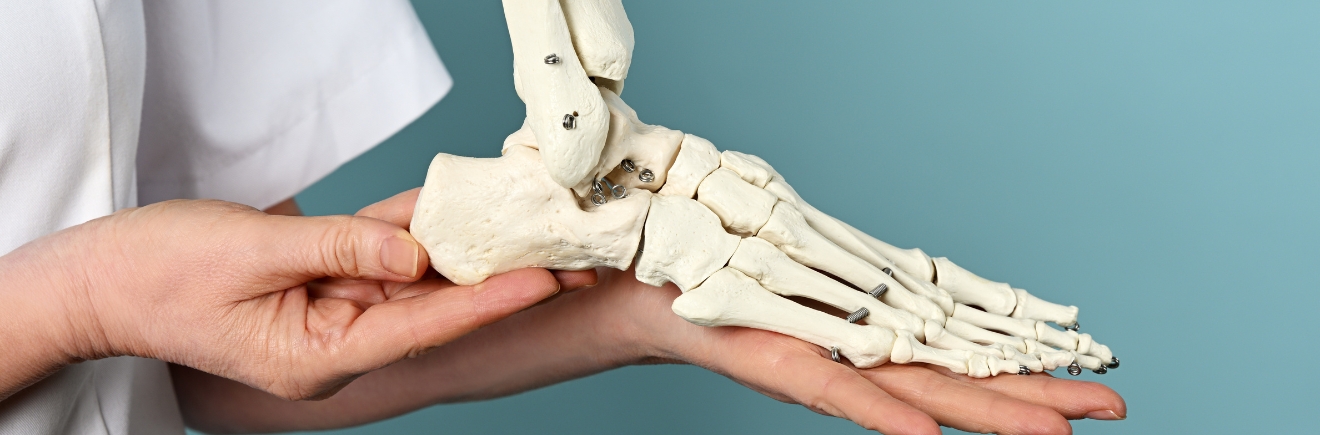
Treatment of Foot Osteoarthritis
Foot osteoarthritis is a degenerative process that causes progressive wear of the cartilage in the joints. It can appear due to aging, malformations, mechanical overload, or following trauma such as repeated sprains.
This condition frequently affects the big toe, although it can appear in any joint and even involve the ankle. At Pie Vital, we perform a podiatric assessment to relieve pain, improve function, and slow the progression of the disease through personalized conservative treatment.
Joint Assessment
We analyze joint mobility, the presence of stiffness, mechanical pain, and biomechanical alterations that may be accelerating cartilage wear.
Conservative Treatment
Treatment focuses on reducing pain and inflammation through mechanical offloading, activity recommendations, exercises, and devices such as orthoses or custom insoles.
Functional Improvement
The goal is to maintain mobility, avoid compensations when walking, and improve the patient's quality of life through a progressive and tailored approach.
Podiatric Approach to Osteoarthritis
Foot osteoarthritis progresses slowly and can cause stiffness, pain when starting to walk, and functional limitation. Podiatric treatment reduces overload on affected joints and promotes a more efficient and less painful gait pattern.
- Joint Mobility Assessment
- Mechanical Offloading of the Foot
- Insoles to Redistribute Pressure
- Recommendations for Activity and Footwear
Frequently asked questions
We answer your questions about foot osteoarthritis
What is foot osteoarthritis?
Foot osteoarthritis is a degenerative disease in which the cartilage covering the joints deteriorates progressively. This wear causes friction between the bones, resulting in pain, stiffness, and loss of mobility. It can affect any joint in the foot, although it is common in the big toe, midfoot, or ankle.
What are the most common symptoms?
The most common symptoms are stiffness upon waking in the morning, pain when starting to walk, swelling, a sensation of joint locking, and progressive loss of mobility. Many people also notice joint cracking or changes in their walking pattern to avoid pain.
Why does foot osteoarthritis occur?
It can occur due to natural aging, repeated overload, intense sports activity, foot malformations, or consequences of trauma such as sprains. These factors alter the biomechanics of the foot and accelerate the wear of joint cartilage.
Is there a cure for foot osteoarthritis?
Osteoarthritis does not have a definitive cure, but there are effective treatments to control pain, improve mobility, and slow its progression. The goal of treatment is to maintain foot function and prevent the disease from limiting daily life.
Do insoles help with foot osteoarthritis?
Yes. Custom insoles are one of the most important treatments because they redistribute loads, reduce pressure on the affected joint, and improve stability when walking, which can significantly reduce pain.
When should I see a podiatrist?
It is advisable to visit when persistent foot pain, stiffness, swelling, or difficulty walking appears. Early assessment allows conservative treatment to be applied before functional limitation becomes greater.
Can it get worse over time?
Yes. Osteoarthritis is progressive and, without treatment, can cause greater stiffness, deformity, and loss of mobility. Podiatric treatment helps slow the progression and maintain quality of life.
When is surgery considered?
Surgery is considered when pain is severe, there is significant limitation of mobility, and conservative treatment does not improve symptoms. It is not usually the first option, and a non-surgical approach is always attempted first.