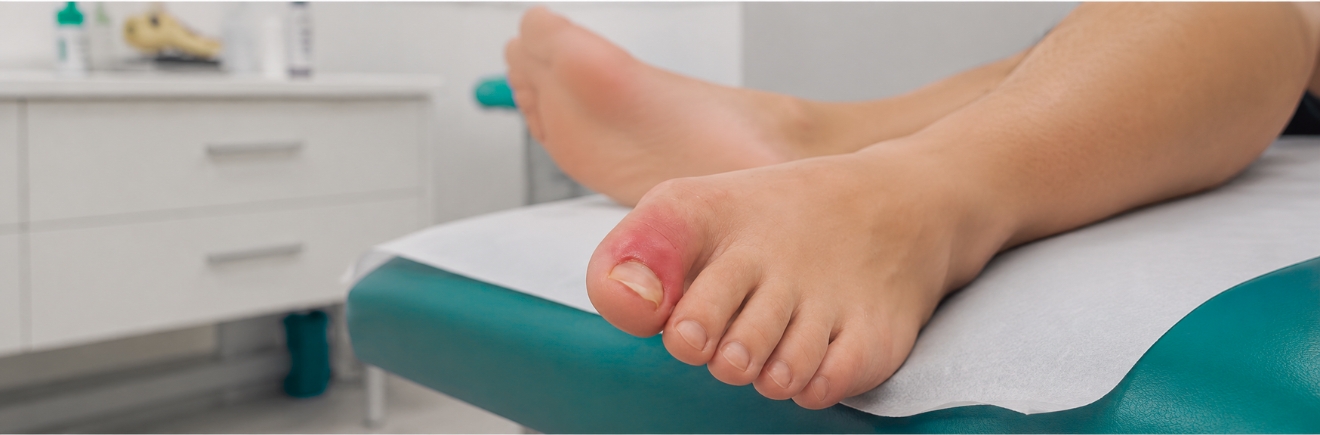
Treatment for ingrown toenails and nail pain
An ingrown toenail, or onychocryptosis, occurs when the edge of the nail grows into the skin of the toe, causing pain, inflammation, redness, and even infection. It is a common condition that can affect daily life, sports, and the use of footwear.
At Pie Vital, we evaluate the cause of the problem, which may be related to the shape of the nail, improper cutting, footwear, or biomechanical factors. Treatment is adapted to the stage of the injury, with the goal of relieving pain and preventing recurrence.
Diagnosis of onychocryptosis
We analyze the morphology of the nail, the surrounding tissues, and the factors that contribute to the appearance of the problem.
Conservative Treatment
In the initial stages, offloading techniques, nail care, and treatments aimed at reducing inflammation can be applied.
Permanent nail surgery
When the problem is recurrent or advanced, minimally invasive nail surgery is performed to resolve it permanently.
Permanent solution for ingrown toenails
Treatment depends on the degree of involvement and the factors causing it. In many cases, nail surgery allows for the removal of the part of the nail responsible for the problem and acts on the matrix to prevent it from becoming ingrown again, with very satisfactory functional and aesthetic results.
- Clinical nail assessment
- Treatment according to stage
- Minimally invasive nail surgery
- Prevention of recurrence
Frequently asked questions
We answer your questions about ingrown toenails
What is an ingrown toenail or onychocryptosis?
An ingrown toenail is a condition in which the edge of the nail grows into the skin of the toe, causing pain, inflammation, and sometimes infection. It can appear occasionally after trauma or develop recurrently when there are anatomical or mechanical factors that cause the nail to dig in.
Why do ingrown toenails appear?
The causes can be multiple, including improper nail cutting, the use of narrow footwear, repeated microtrauma, sports, or anatomical factors such as the shape of the nail, the nail matrix, or the morphology of the toe. These factors can act in isolation or in combination.
What are the most common symptoms?
Symptoms usually begin with localized pain when pressing the toe, redness, and inflammation at the nail edge. As it progresses, infection, suppuration, increased tissue volume, and difficulty wearing shoes or walking normally may occur.
Is it always necessary to operate on an ingrown toenail?
Not always. In the initial stages, it can be treated using conservative techniques aimed at reducing pressure and controlling inflammation. However, when the problem is recurrent or advanced, nail surgery is usually the most effective option to resolve it permanently.
What does nail surgery for an ingrown toenail involve?
The surgery consists of removing the portion of the nail responsible for the problem and acting on the matrix to prevent it from growing back in the same way. It can be performed using chemical or mechanical techniques, selected according to the morphology of the nail and the patient’s characteristics.
Is the procedure painful?
The procedure is performed under local anesthesia, which allows the nail to be treated without pain during the intervention. Afterwards, there may be mild discomfort or a feeling of sensitivity, which is usually controlled with basic care and guidelines provided by the specialist.
How long does recovery take after surgery?
Recovery is usually quick and compatible with daily activity. In most cases, the patient can walk after the procedure, although it is advisable to follow local care instructions and avoid excessive pressure during the first few days.
Can an ingrown toenail reappear after treatment?
When the technique is performed correctly and the responsible matrix is removed, the probability of recurrence is low. Nevertheless, maintaining proper nail care and using appropriate footwear helps prevent new episodes.